14. Estonia (owned by all, known by few)
The only reason I can find it on a map is because epic choral music comes from the Baltics (Estonia, Latvia, and Lithuania) and in 8th grade I found their geographical location interesting. #nerdalert
Pre-Blog Quiz:
Estonian food is traditionally...
A) lots of vinegar
B) spicy
C) not spicy, but creative with kinds of spice
D) pretty bland and dairy-focused
(Read on to discover!)
Day 45. Sunday 7/5/26
Goodbye Norway. Hello Estonia!
At our layover in Copenhagen, I was able to enjoy one last smørrebrød!


Nothing screams "welcome to a new country with a language you don't know" quite like this exit sign.

Niguliste Kirik (St. Nicholas' Church). Likely founded in the middle of 13c. by German Merchants, dedicated to the patron saint of merchants and seafarers. The original structure has been built on, destroyed, and renovated many times over.
Altarpiece in Tallen (1478-1481). Wowzers this was cool. Carved wood and painted on the inside, here seen in the open position. In the closed position, it is painted on flat wood. We attended the half-hour organ concert, performed by guest organist Gustav-Leo Kivirand. He opened with a work by Pérotin (1180-1236), which is the oldest composition I've ever heard on the organ. I have also never been to a program that featured exclusively 16th-century music (old!), which was the rest of the program, so I enjoyed that immersion in combination with the space. "Time and place" is a compositional inspiration for me.

"Homeless Bells". "Church bells should not wander or become homeless. Nevertheless, it sometimes happens. In most cases, this occurs when buildings are deserted or during a
war" (St. Nicholas Plaque). Never thought about this. Found this moving and interesting.

They installed a Willy Wonka glass elevator right in the middle of the room below the bell tower going straight up. It was an extremely bizarre sight to see in such an old historic church. Instead, I hiked the 300steps to the top, which squeezed me out the narrow top of the church for stunning views of Tallinn's Old Town and the Baltic Sea.


We stayed at the historic The Three Sisters Hotel. Three sisters each were given one of these houses by their family. They swore to each other they would never move until one of them got married. Somehow that turned into a devotion to each other, and never getting married, so they stayed in these merchant houses for their whole lives.
Ukrainian Restaurant -- "Odessa Restoran & Baar". Recommended by a local, we dove down into the basement and were welcomed with on-the-house "grandma's vodka recipe" -- horseradish and vodka -- and bites. Honestly, probably the best way to drink vodka in the cold winters. We had rabbit dumplings with a cream sauce, duck dumplings with a tangy sauce, and chicken Kiev (chicken, cheese, and spices, breaded, fried -- like a giant chicken mozzarella stick), and a very earthy and rustic Ukrainian red wine. One of the top 10 meals on this trip for all elements combined.


Day 46. Monday 7/6/26
Bike Tour
Took a historic bike tour that shared the dark and resilient past of Estonia.
Tallinn was under Danish occupation for a while. “Tallinn” literally means “Danish Town”. Sweden took it over. Many churches were built during the crusades. The people hated both. Much of Estonia is either passionately Agnostic, Atheist, or Maausk (native earth/land paganism). Peter the Great wanted the Baltic Sea and invaded for the first time. The second invasion was a scorched-earth approach, leaving only 100,000 people. In 1940 Stalin worked to Russify Estonia by executing 22,000 political leaders, deported many to Siberia, and cut of Estonia from the rest of the world.
Soviet Union later invaded again with Stalin, until 1991 when the Soviet Union's economy and infrastructure collapsed.
Soviets stole everything when they left, including window frames. Estonia was left desolate. When liberated, most propaganda/statues were destroyed. Some were saved. Very depressing and stark to see them gathered in this sculpture garden.

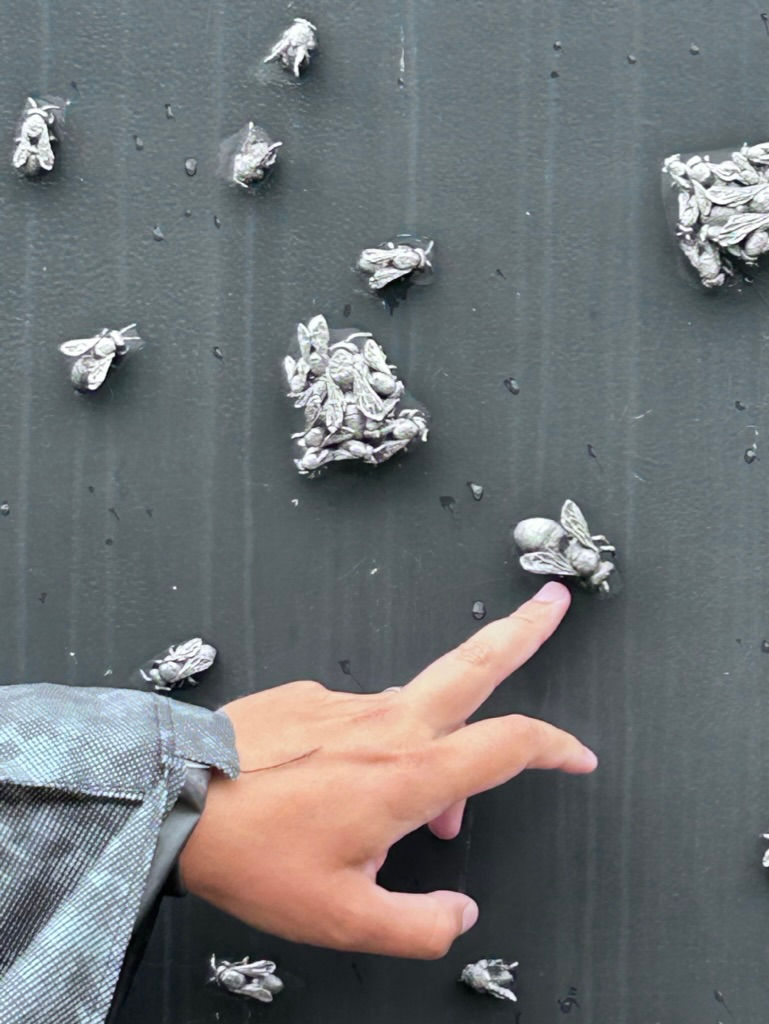
We Visited the Estonian Memorial to the Victims of Communism on the outskirts of the city. One of the more profound monuments I’ve seen, commemorating the more than 75,000 Estonians who were murdered, imprisoned, or deported by the Soviet Regime between 1940-1991. Over 22K victims names are printed. Thousands of metal copies of actual honeybees, representing the hard working Estonian and their longing for home and community.


The Estonian Song Festival (Laulupidu) -- The Singing Revolution. Big stinking deal of how music, culture, and politics intersect. It's the largest singing cultural event I know of, with profound impact over 150 years. I can appropriately tell and assert the impact and weight of this cultural event.
Massive national choral event. Originated in Tartu in 1869, evolved into a symbol of Estonian resistance during Soviet occupation, and catalyzed the peaceful Singing Revolution to regain independence. Moved permanently to purpose-built Tallinn Song Festival Grounds in 1928, scheduling events every five years.
This has been a cultural lifeline in Estonian and human history. Estonians used choral music to preserve national identity despite strict Soviet censorship and propaganda attempts. Crowds and choirs repeatedly forced forbidden patriotic pieces like Mu isamaa on minu arm into performances.
In 1988, a mass gathering of over 300,000 people united at the Tallinn grounds in spontaneous, peaceful protests, singing national songs. In 2003, UNESCO recognized it as an Intangible Cultural Heritage masterpiece drawing tens of thousands of performers every five years.
Picture of Song Festival Arena

Tallinn Food Tour
Estonia is 10x smaller than Texas. Estonia (1.3 million population) is the same size as the Netherlands (18 million population). Europe, Russia, and Scandinavia are right in the middle of 3 major trade routes that defined its existence.
Estonia has as dynamic past. Ruled by Denmark —> Germany —> Sweden —> Estonia (1920s first republic of Estonia but fell apart in WW2) —> Soviet Union —> Estonia (1991 to present)
Mushroom Soup. Monks were the most educated and knew which mushrooms were safe, nutritious, medicinal, toxic.
“Beer brings clarity, Wine brings wisdom, and Water brings disease.”

Merchants had the best food to eat because they had access to food all around the world. The Hanseatic League cared a lot about the quality of beer. One test of quality beer was to spill it on the bench and make sure it stuck to his butt. If so, it’s good. Or a coin would beed to be able to rest in the foam for a bit. If so, it’s good. I’ll admit I’ve tested one of those before.
Lots of Museums. “One museum per 5000 people”. There’s a banned book museum. Our guide told us that “Orwell’s book 1984 is banned in the USA for its socialist Agenda… and is banned in Russia for not being socialist enough.”
I tried Garlic Chocolate. I will reenact the taste experience for you in order:
[chocolate, chocolate, chocolate, garlic, garlic, garlic, garlic, (garlic). I later learned that Estonian garlic is like 3-5 times more potent than most cooking garlic. So you have to adjust when cooking.
We learned that they eat mustard with lots of things. We bought a bunch of tubes of this table mustard “Sinep” and brought it back to the States. It’s mostly horseradish and zingy! Totally looks like a tube of super glue.

We were told that desserts or sweet treats are a pretty popular norm in modern cuisine.
Visited an old Marzipan shop. I talked with one of the artisans who was making little figurines. She was kind enough to stop what she was doing (with a shoulder-to-shoulder packed store) and take me over to the display counter to show off her favorite creations and the process for making them.


We went to a Russian restaurant with preserved Russian-era decor and loaded with briny, salty food.


Here’s a coffee menu in Estonian & English. Check out the bottom left corner! This is hilarious.

Day 47. Tuesday 7/7/26
Some photos of town.


Estonia Concert in St. Nicholas’
After connecting with the artistic director of the church/museum/gallery, she invited me to perform a piano recital in the nave. I brought by iPad and performed an eclectic set of music, including original compositions, on their newly acquired “Estonia” piano. Literally, the brand is called “Estonia” and is made in Estonia. The piano, acoustics, and people were lovely. This was a very refreshing and filling experience for me. Dad has all the photos of this.

Thought this Samsa menu was cool.


Went to the artsy boho district on the other side of the tracks. Went into a market the size of a Costco/Walmart full of recycled second-hand stuff. It looked like Opa’s basement. Incredible. Bought some vintage clothes for Bethany. Hope she likes them.


Estonian Cooking Class
Dad and I had a blast! Dad, Me, a Finnish guy, and the chef. Big takeaways.
Estonians don’t see their cuisine as special — “It’s just something we eat at home”. So they aren’t particularly proud of their food.
Every dish calls for cream or sour cream. So much cream
Estonian food doesn’t use much seasoning. Salt and pepper only.
Every home has its own potato salad
Potatoes were introduced into the cuisine in 1840s (aka, the Estonians discovered the potato), and to this day they still eat a lot of potatoes.
We Made: Barley Bread (Karask), Potato & Cottage Cheese salad, Potato Salad, Mixed Meat Patties, Kama Mousse.

Look at our beautiful traditional Estonian home-cooked meal!

Day 48. Wednesday 7/8/26
Started the day with a sweet potato, meat pie, and sour cream, and a fist of red cabbage. Way too heavy.


Climbed the medieval fortress wall. Dad was brave and climbed through rickety, hundred-year-old walls and scaffolding.


Visited the Nikolai Church, Russian Orthodox, build 1822-1827)

For decades, people from Finland would take copious amount of beer from Estonia back to Finland via ferry because it’s cheaper. Similar to driving across borders to buy gas.

When I thought “Ferry from Estonia to Finland”— I thought like 100 people on an open-air boat. No — it was this entire cruise ship-like situation. We thought we left plenty of time to get to the ferry, but it was a long walk and we got stopped by a boat — we walked on this thousands-of-people vessel and then we shoved off 3 minutes later!

Post-Blog Quiz:
Estonian food is traditionally...
A) lots of vinegar
B) spicy
C) not spicy, but creative with kinds of spice
D) pretty bland and dairy-focused
Answer: The answer is the last of the answers. They used what they had, which wasn't much access to spices, and lots of access to dairy.
Next stop,


